
18 St. Elijah Church
St. Elijah Church is one of the most important places of worship in the central area of Craiova and a significant metropolitan chapel.
It is located at 2 Constantin Nicolăescu-Plopșor Street, in the immediate vicinity of Lipscani Street—the main commercial thoroughfare of the old town—and the Administrative Palace.
The church was built in 1720 “in the middle of the market” by the steward Ilie Otetelișanu.
It was painted in 1840 by Ctin Lecca.
The church features an inscription placed in 1890, still visible today, which is a small gem of a historical document: “In place of the old church built by Ilie Otetelișanu around the year 1751, this holy church was constructed… With His Majesty King Carol I and Queen Elisaveta on the throne of the country, His Royal Highness Ferdinand, Heir Apparent, Bishop D. D. Ghenadie, and the founders Maria C. Otetelișanu and her sons… Architect F. Springer, Contractors C. Trolli & C. Bardelli. The cornerstone of this church, dedicated to St. Elijah, was laid on July 7, 1889, and construction was completed on August 30, 1890.”
Anyone who reads carefully can learn, from a single inscription, who the king was, who the heir to the throne was, who the bishop was, who built it, and how long it took.
A little-known fact that makes this place a key site in Craiova’s history: funds from this church were used to establish the first central girls’ school in Wallachia.
In 1837, brothers Iordache and Grigore Otetelișanu drafted a will in which they decided to use funds from the Church of Saint Elijah—of which they were trustees—to convert the Lazaro houses into a girls’ boarding school.
This is how the Lazaro-Otetelișanu Girls’ School—today the “Elena Cuza” National College—came into being.
In other words, a church funded girls’ education at a time when this was an absolute novelty.
Ilie Otetelișanu’s will is worth quoting, as it illustrates what aristocratic philanthropy meant at the time: He endowed the church with estates, his houses in Craiova, the vineyard in Sutești, and other assets, naming his cousin Barbu Otetelișanu as the church’s founder and instructing him to use the surplus income “to clothe the poor, free debtors from prison, and feed the sick.”
References
- Magda Buce Răduț The Past in Today’s Craiova
Continue exploring
Other recommended locations
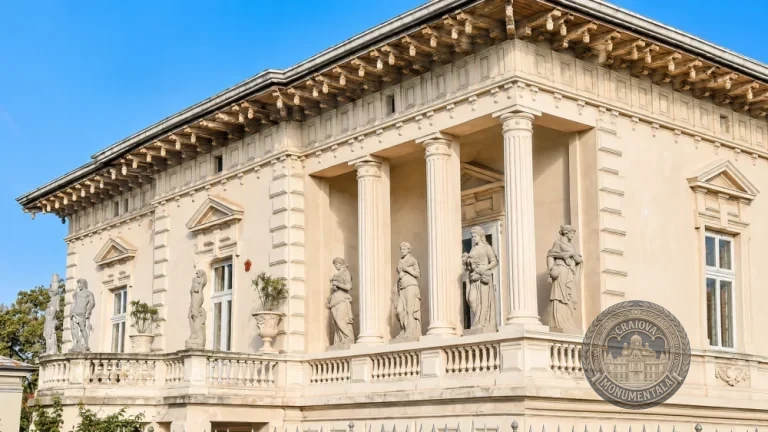
91 Casa Gabroveanu
Pe strada Iancu Jianu nr. 10, în apropierea Grădinii Botanice, se află Casa Gabroveanu, clădirea a fost construită...
View location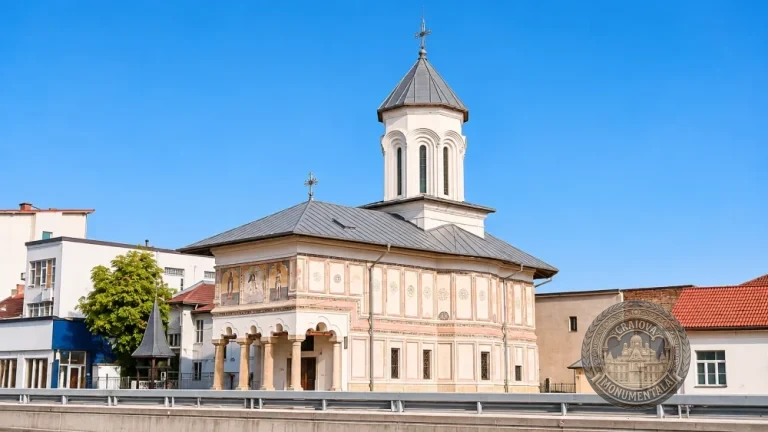
29 The “Old St. George” Church
The “Old St. George” Church, located today on Arieș Street, is the third oldest of the stone churches...
View location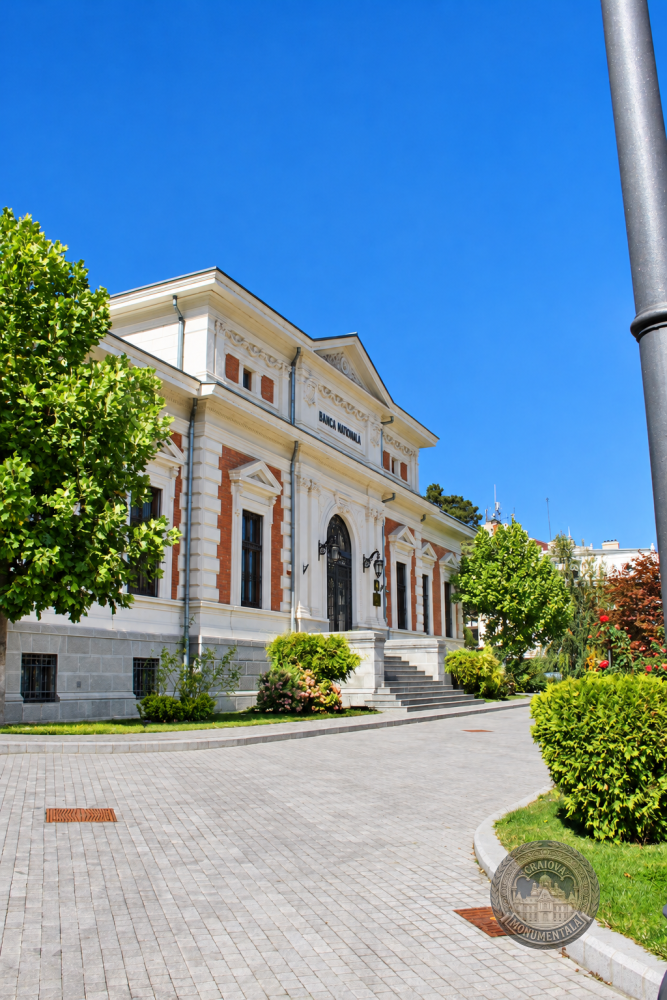
6 National Bank of Romania – Dolj Branch
The National Bank of Romania building at 6 Calea Unirii, at the end facing Valea Vlăicii, tells the...
View location