7 The Roman Catholic Church of “All Saints” – “St. Anthony”
The church is dedicated to “All Saints” (November 1) and “St. Anthony of Padua.” It is a historic monument dating back more than a century and a half and is part of a street corner worth seeing in its entirety, as it brings together four monuments belonging to different religious communities.
The Catholic parish in Craiova was established in 1827, as a Catholic community in the city grew in size. The parish church was built in 1844 on land acquired in 1827 and consecrated by Bishop Giuseppe-Maria Molajoni, who dedicated it to “All Saints.”
In the second half of the 19th century, the Catholic community in Craiova continued to grow.
A significant milestone occurred in 1884, when the Emperor of Austria-Hungary, Franz Joseph I, donated 2,500 gold coins for the repair and modernization of the church.
The work was carried out during the tenure of Pastor Eduard Struzina.
The old tower was demolished and replaced with a Gothic-style one, which became a defining feature of the building’s silhouette. Other interior renovations were also carried out, emphasizing the church’s Neo-Gothic character.
It was later equipped with three carved Gothic altars, and in 1894, the organ was purchased.
Schools operated alongside the church from the very beginning: first as part of the parish, then the “English Ladies” (today the Congregatio Jesu) opened their own school, which closed in 1948. There was also a shelter for poor women on the parish grounds, founded by parish priest Andrei Kuczka.
Between 1991 and 1994, with support from the German and Italian governments, the “St. Anthony” kindergarten was built in the parish courtyard, and between 1998 and 1999, the interior of the church, its paintings, and its statues were renovated.
Today, in addition to the parish, there is a kindergarten and an elementary school dedicated to Saint Anthony of Padua, as well as a post-secondary nursing school.
This church is a centerpiece of cosmopolitan Craiova: it shows that, as early as the 19th century, the city had an active Catholic community, with schools, a shelter, and its own parish life. An important clarification for the sake of accuracy: the church is Roman Catholic and belongs to the Roman Catholic Archdiocese of Bucharest.
Continue exploring
Other recommended locations
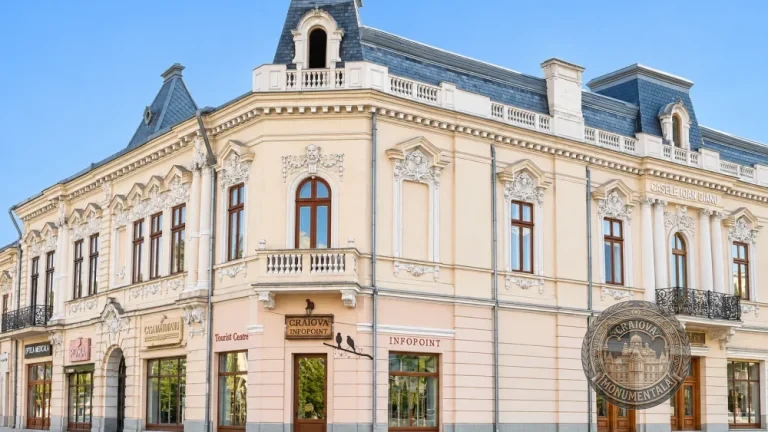
23 The Dianu House
Built in the early 20th century as a private residence for the Dianu family, the building quickly became...
View location
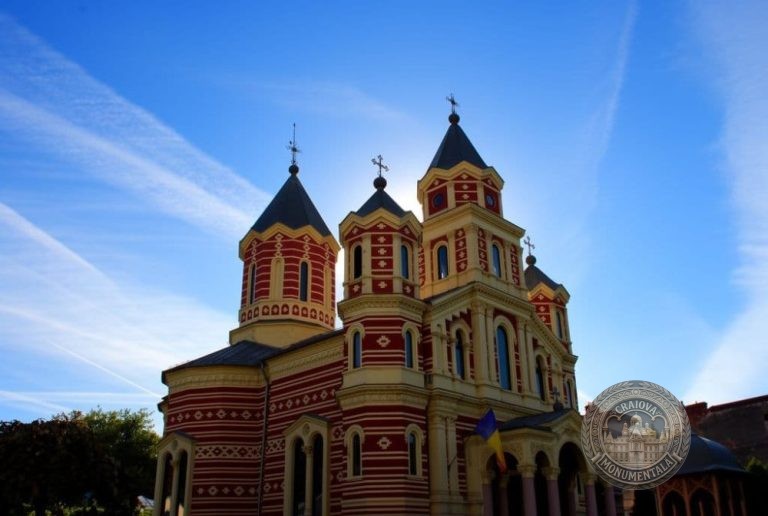
15 The Equestrian Statue of Mihai Viteazul
In Unirii Square in Craiova, near the Prefecture, a voivode on horseback gazes toward the sunset. It is...
View location