2 The Jean Mihail Palace
Located at 15 Calea Unirii, it is, for many residents of Craiova, the most beautiful house in the city. The Jean Mihail Palace was built between 1898 and 1907 but inaugurated in 1909; today it houses the Craiova Art Museum, with a collection that includes works by Theodor Aman and pieces by Constantin Brâncuși.
The palace was built for Constantin (Dinu) Mihail, a landowner and politician, son of the great Aromanian tenant farmer and landowner Nicolachi Mihail, who came to Oltenia from Macedonia in the early 19th century. Upon becoming president of the Dolj County Council in 1888, Dinu Mihail wanted a residence befitting his wealth and status and, like many boyars of the time, turned to renowned foreign architects. Paul Gottereau, architect to the French Royal Court—who had also left his mark on the CEC Palace, the Central University Library, and the Royal Palace at Cotroceni in Bucharest, as well as the Marincu Palace in Calafat—was commissioned to draw up the plans. The construction was carried out by the Italian architect Constantino Cichi.
The building combines an eclectic style inspired by French Neo-Baroque with interiors of dazzling luxury: Venetian mirrors, silk wallpaper from Lyon, crystal chandeliers, and stucco work gilded with gold leaf. The building’s size and splendor reflected the family’s colossal wealth, as well as the owner’s desire to leave Craiova a monument of European stature. The palace’s fate is closely intertwined with the great history of the 20th century: in the fall of 1939, the building hosted the President of Poland, Ignacy Mościcki, who was in exile, and in September 1940, the Treaty of Craiova was signed in the ground-floor salons, under which Romania ceded the Quadrilateral to Bulgaria. Furthermore, in the fall of 1944, the palace served as the residence of Marshal Iosif Broz Tito. Since 1954, the building has housed the Craiova Art Museum, whose collection includes priceless works, among them original pieces by the sculptor Constantin Brâncuși.
Since its inauguration in 1909, the Palace has hosted prominent figures from Romania: King Carol I, King Ferdinand, King Mihai I, Marshal Ion Antonescu, and, among figures from other countries, French President Charles de Gaulle.
Currently, the Art Museum holds over 12,000 works of art.
The Brâncuși Gallery typically houses six works by the great sculptor: Vitellius, Pride, Boy’s Head, Torso (Thigh), The Kiss, and Miss Pogany.
In 1962, a bust of Theodor Aman, sculpted by Ion Jalea, was installed in the park in front of the museum.
References
- Paul Rezeanu, „The Craiova Art Museum – Jean Mihail Palace”
- Magda Buce Răduț, The Past in Today’s Craiova
Continue exploring
Other recommended locations
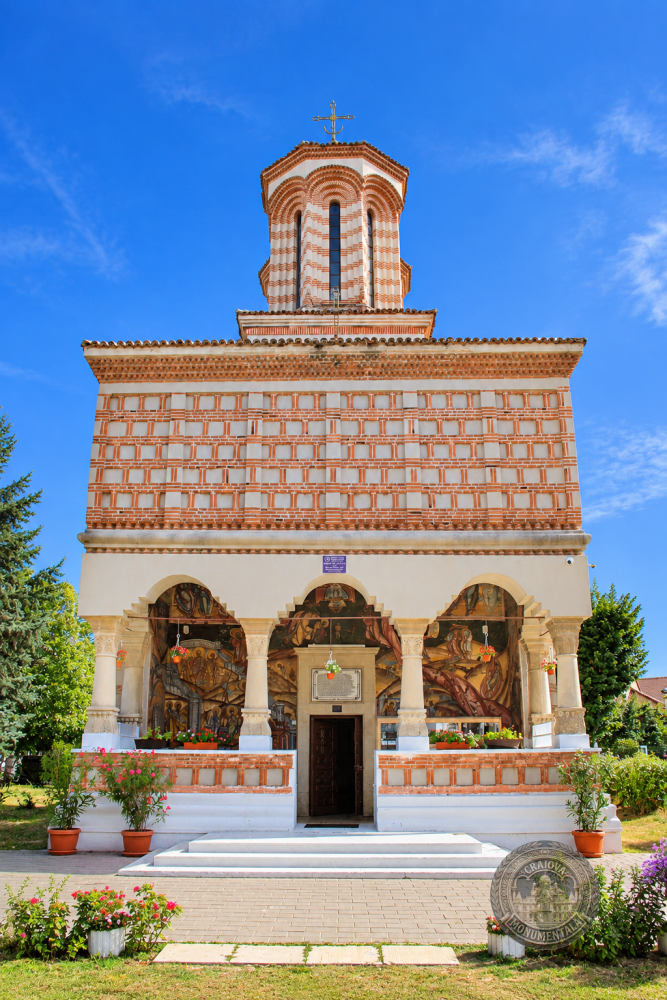
27 The “Holy Apostles” Church
The “Holy Apostles” Church, located at 1 Sfinții Apostoli Street, is one of the oldest in Craiova. In...
View location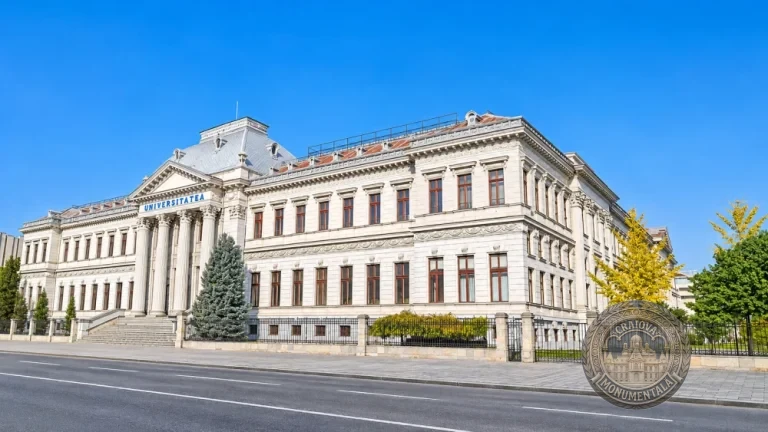
24 The Palace of Justice — University of Craiova
The most imposing building in downtown Craiova was not built for students, but for judges. The building at...
View location
26 All Saints Church – Hagi Enuș
At 21 Alexandru Ioan Cuza Street, on the western edge of old Bănie, stands one of Craiova’s oldest...
View location