75 – Băniei House
Casa Băniei is the oldest surviving civilian building in Craiova, and today it houses the Ethnography Department of the Oltenia Museum.
The name comes from “ban,” the highest office in Oltenia. The ban was, in essence, the ruler of the region, and his residence was located here—which makes this place the former center of power in Oltenia.
This site was once home to the great Craiovești boyars, direct descendants of Basarab the Founder, who established their settlement here at the end of the 15th century. The current building, in the Brâncoveanu style, was erected by Constantin Brâncoveanu in 1699 on the site of an older structure that had served as the residence of the bans, the great bans, and Mihai Viteazul. Brâncoveanu was a descendant of the same Craiovești family, the eighth generation from Neagoe, and he rebuilt the houses using taxes collected from the counties of Oltenia—that is, from the contributions of the entire region. Of the Craiovești family’s original construction, only a portion of the cellars remains today.
The building has had a long and eventful history: it has been set on fire countless times, has passed through various owners and administrations, and has undergone, as circumstances required, architectural transformations, additions, and alterations.
The Bănie Houses burned down during the Russo-Turkish War of 1768–1774. They were subsequently rebuilt. In 1780, the houses were owned by Ion Glogoveanu and Ion Brăiloiu, who exchanged them with the Otetelișanu family. Later, they came into the possession of Petrache Bucureșteanul, who donated them to the state.
Starting in 1850, it served as the headquarters for various city institutions: the Craiova Court, the “Frații Buzești” Royal Gymnasium, the Teachers’ College, the Theological Seminary, and the State Archives.
From 1933, it housed the Museum of Oltenia until 1948, when it was transferred to the Metropolitan See of Oltenia. Since 1966, the old Brâncoveanu-style monument has housed the Ethnography Department of the Oltenia Museum—which is exactly what suits it: a house from old Craiova, filled with artifacts from old Craiova.
Next to the building, in 1933, the old stone cross was brought—it had been erected in 1826 at a fountain on the eastern side of the city.
Sources:
Magda Buce Raduț – The Past in Today’s Craiova
Continue exploring
Other recommended locations
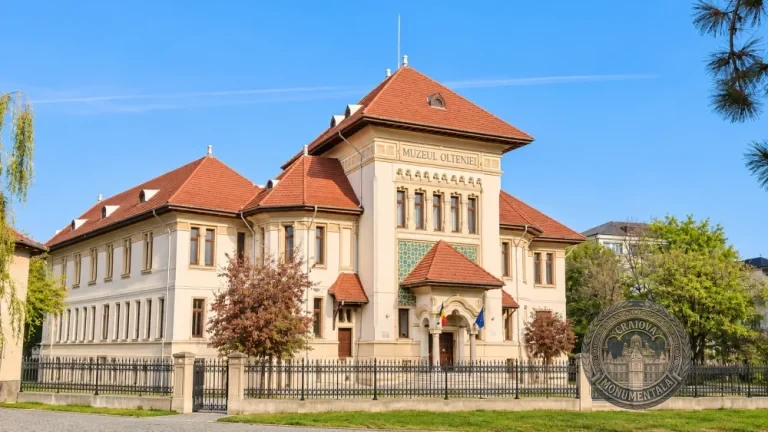
77 Școala Centrală de Fete
Edificiul fostei Școli Centrale de Fete, care găzduiește astăzi Secția de Istorie-Arheologie a Muzeului Olteniei, a fost ridicat...
View location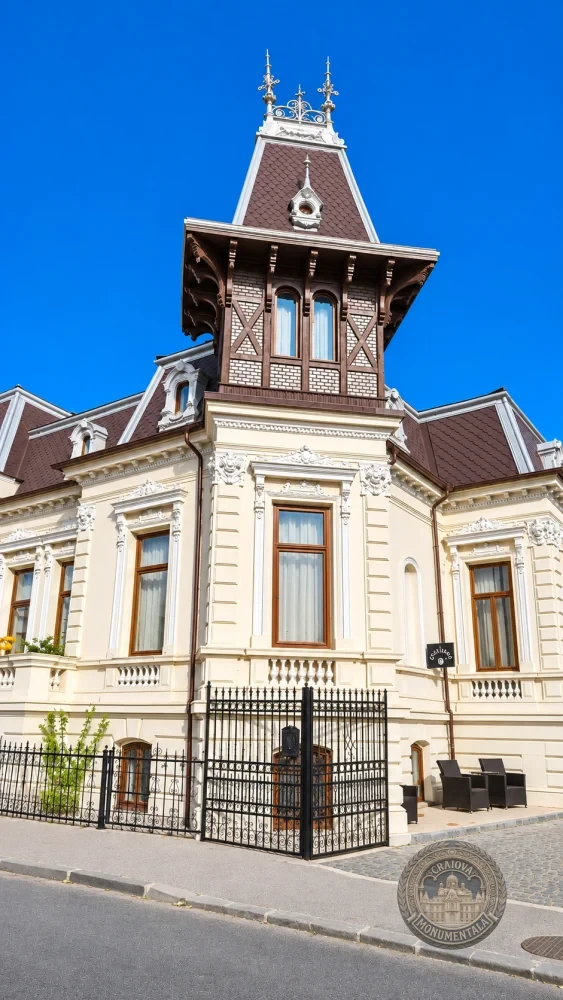
34 Pretorian House
The Augustin Pretorian House is a historic residence in Craiova that has now been converted into a hotel....
View location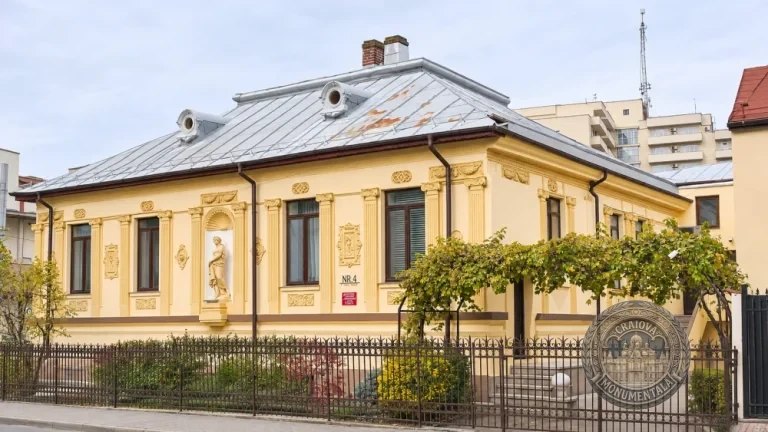
70 – Gheorghe Chițu House
On Știrbei Vodă Boulevard, near the “Frații Buzești” National High School, stands the home of one of the...
View location
37 Elena Farago House
The “Elena Farago” Memorial House, located in the courtyard of the “Alexandru and Aristia Aman” County Library in...
View location