36 Lipscani Passage – Craiova’s Bazaar
The Lipscani Passage, also known as the Craiova Bazaar, is one of the city’s most interesting historic shopping areas. Located in the heart of the old market, the passage connects Lipscani Street and Mihail Kogălniceanu Street, preserving the memory of an era when this area was the main commercial hub of Craiova.
The history of this place is closely tied to the development of Lipscani Street, one of Craiova’s liveliest commercial thoroughfares in the 19th and 20th centuries. The name “Lipscani” comes from the merchants who brought goods from Leipzig, known in Romanian as Lipsca.
At the beginning of the 20th century, the street was lined with buildings that had commercial spaces on the ground floor and residential units on the upper floors. Here, there were fabric stores, watchmakers, cafés, restaurants, and shops selling goods from Romania and abroad. The bustling trade and constant flow of shoppers led to the creation of secondary passageways between neighboring streets.
In 1893, merchant Petrache Andreescu and the firm Benvenisti & Eskenasy requested approval from the Craiova City Hall to build houses along the small alley connecting Kogălniceanu Street to Lipscani Street. The authorities approved the construction on the condition that the buildings align with Casa Aman and Mrs. Panu’s property.
The two buildings were to be connected by four arches built over the alley, which was to remain open to traffic.
During the communist regime, the passageway was converted into a small covered market. According to retrospective accounts, the commercial conversion took place around 1975–1976. The space housed shops and a consignment store, a place well-known to Craiova residents for selling products that were harder to find in regular stores.
In 2016, the Craiova City Hall carried out modernization work on the passageway, including repaving the floor and installing a decorative translucent roof with colorful elements. The investment aimed both to improve traffic conditions and to revitalize the area commercially and culturally.
The roof, inspired by traditional Oltenian textile motifs, has become one of the passageway’s distinctive visual features. In the years that followed, the space was integrated into the Old Town’s tourist circuit and used to house small shops, decorative items, and commercial activities.
In 2026, new improvements were unveiled, including the restoration of an indoor fountain, as part of efforts to revitalize the bazaar.
References
- Luchian Deaconu Craiova 1898-1916. The jump to modern urbanism
Continue exploring
Other recommended locations
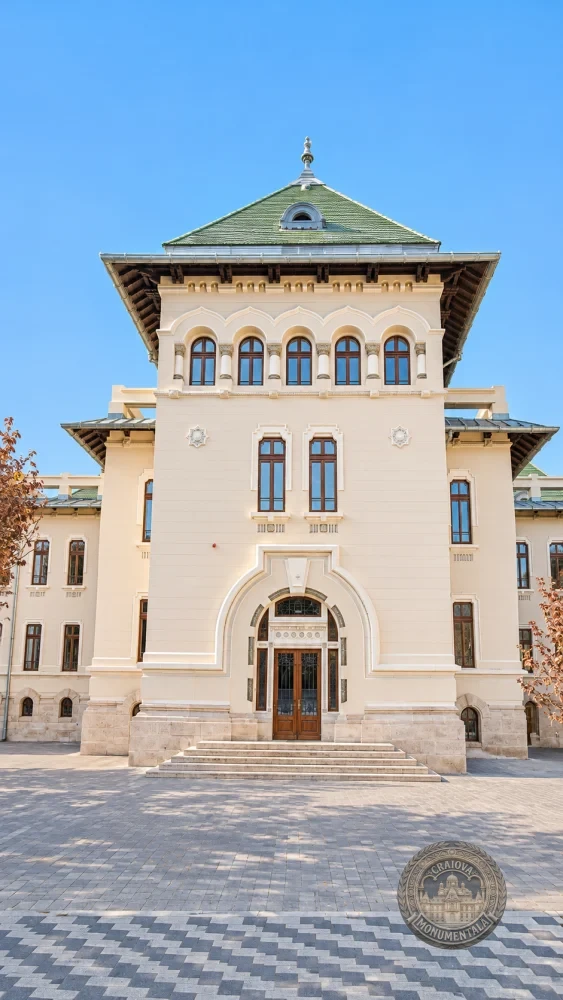
16 The Administrative Palace
If you want to understand at a glance what the Neo-Romanian style is, stop by Prefecture Square in...
View location